
 EN
EN
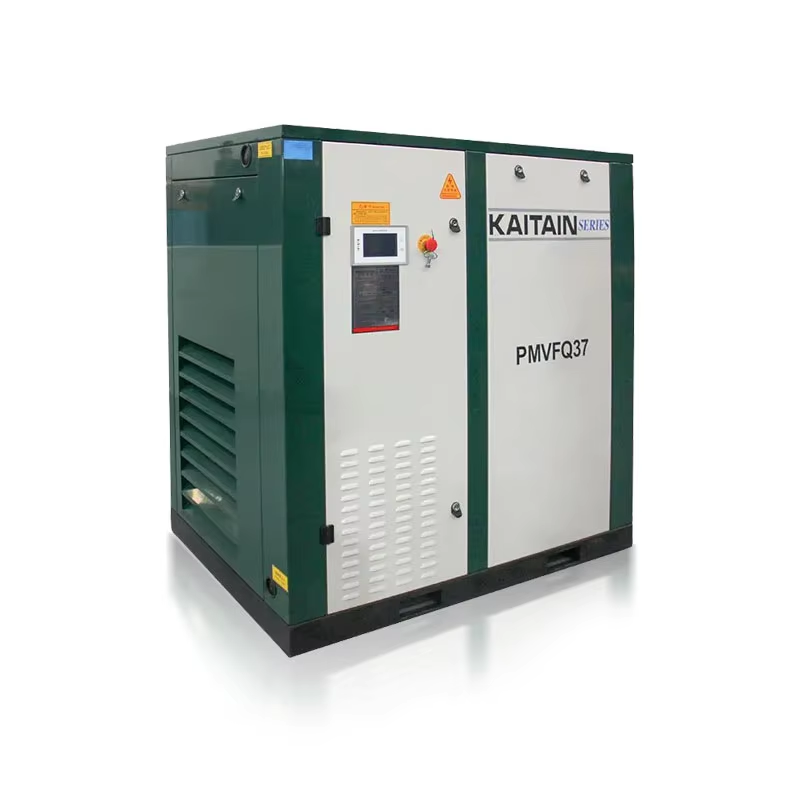
How Do You Accurately Size a Screw Air Compressor for Your Air Demand?
Understanding SCFM, ACFM, and DCFM in Screw Air Compressor Selection
Proper sizing begins with differentiating airflow metrics:
- SCFM (Standard Cubic Feet per Minute) measures airflow at standardized conditions (68°F, 36% humidity)
- ACFM (Actual Cubic Feet per Minute) reflects real-world airflow based on your facility’s temperature, pressure, and humidity
- DCFM (Displaced CFM) represents the compressor’s theoretical output without accounting for system inefficiencies
A common mistake is relying on DCFM instead of ACFM, which can lead to undersizing by 15–25%. Always base specifications on actual site conditions, including altitude and ambient climate, to ensure reliable performance.
Calculating Total Facility Air Demand and Surge Capacity Needs
Accurate demand calculation requires analyzing peak usage periods and simultaneous tool operation. Follow these steps:
- Sum the CFM requirements of all pneumatic tools used during peak production
- Add a 30–50% buffer for air leaks and unaccounted usage (Pneumatic Systems Journal, 2023)
- Factor in seasonal spikes that may increase demand by 20–35%
Surge capacity—achieved through properly sized storage tanks—is essential for high-demand intermittent processes like spray painting or sandblasting, helping maintain stable pressure and reduce compressor cycling.
Determining Required PSIG for Pneumatic Tools and Industrial Applications
Most industrial tools operate between 90–120 PSIG, though specialized equipment such as CNC machines may require up to 150 PSIG. To determine system pressure needs:
- Identify the highest-pressure tool in use (e.g., industrial drills at 110 PSIG)
- Add 10–15% to compensate for pressure drops across filters, dryers, and piping
- Ensure compliance with ISO 8573-1:2023 standards, especially for sensitive applications requiring oil-free air
Matching Screw Air Compressor Output to Usage Patterns and Duty Cycles
Selecting between VSD (Variable Speed Drive) and fixed-speed compressors depends on load variability. VSD units excel in environments with 40–80% fluctuation in demand, adjusting motor speed to match airflow needs and reducing energy waste. Fixed-speed models are more efficient when demand is steady and continuous. Consider:
- Daily runtime hours
- Frequency of load changes
- Energy pricing structures (peak vs. off-peak)
For 24/7 operations, rotary screw compressors with modular staging offer up to 40% better partial-load efficiency than single-unit systems.
Oil-Injected vs. Oil-Free Screw Air Compressor: Which Is Right for Your Industry?
Key Differences Between Oil-Injected and Oil-Free Rotary Screw Compressor Systems
Oil-injected screw compressors use lubricating oil for sealing, cooling, and rotor protection, offering lower initial costs and robust performance. Oil-free models rely on precision-engineered rotors and advanced coatings to eliminate lubrication, ensuring cleaner air output. According to a 2024 Compressed Air Technology Review, key differences include:
| Feature | Oil-Injected Screw Compressor | Oil-Free Screw Compressor |
|---|---|---|
| Air Purity | Requires multi-stage filtration | Meets ISO 8573-1 Class 0 |
| Maintenance Frequency | 70–100 hours (oil changes) | 2,000+ hours (seal checks) |
| Contaminant Risks | Oil aerosols (¾3 ppm typical) | <0.01 mg/m³ oil content |
| Initial Cost | $18k–$45k (75 kW models) | 40–60% higher upfront |
In industries like pharmaceuticals, where contamination events average $740k in losses (Ponemon 2023), oil-free systems provide critical risk mitigation despite higher capital investment.
Compressed Air Quality Standards by Application (ISO 8573 Classification)
ISO 8573-1 sets out air purity standards divided into seven different classes. At the top end we have Class 0 which is the most stringent requirement, demanding under 0.01 mg per cubic meter of oil content. Only special oil free compressors can meet these specs. Most food and drink operations need at least Class 2 levels, around 0.1 mg per cubic meter, whereas regular manufacturing work usually gets away with Class 4 specifications at about 5 mg per cubic meter. Getting the right class for each situation isn't just about following rules it actually protects the quality of what gets produced and keeps everything within legal boundaries too.
Assessing Contamination Risks and End-Use Sensitivity in Critical Processes
In high-sensitivity environments such as semiconductor manufacturing, even trace oil from filtered oil-injected systems increases defect rates by 34% (SEMI 2024). Common contamination pathways include:
- Oil vapor bypassing coalescing filters
- Accumulation on pipeline walls
- Filter failure during pressure surges
For processes allowing less than eight hours of downtime annually, oil-free compressors reduce unplanned maintenance by 62% compared to oil-lubricated alternatives (Compressed Air Best Practices 2024), enhancing operational reliability.
Fixed-Speed vs. VSD Screw Air Compressor: Evaluating Energy Efficiency and Real-World Savings
How VSD Technology Optimizes Energy Use Under Variable Load Conditions
VSD screw air compressors change how fast their motors run based on what's needed right now. This keeps the air pressure steady within about 1 psi while saving between 20 to 35 percent on energy costs when loads vary, according to some recent studies from government sources. The big difference compared to regular fixed speed models is that these don't keep turning on and off at full blast all day long. Instead they just ramp up or down as necessary, which means fewer sudden stops and starts for the machine. Less wear and tear like this typically makes parts last longer too maybe around 15 or 20 percent extra time before needing replacement.
Energy Efficiency Advancements in Modern Screw Air Compressor Controls
Today’s VSD systems integrate predictive algorithms that analyze historical usage and optimize output to prevent energy spikes. In facilities operating below 80% capacity over half the year, these controls reduce idle losses by up to 40% through:
- Intelligent load-sharing across multiple compressors
- Dynamic pressure band adjustment
- Remote monitoring for demand forecasting and diagnostics
These features enhance efficiency without sacrificing responsiveness.
Lifecycle Cost Analysis: Initial Cost vs. Long-Term Savings of VSD Models
Although VSD compressors carry a 25–40% price premium, most operators recover the investment within 2–3 years via energy savings. A 2024 industry study found that facilities with over 6,000 annual operating hours achieve significantly lower total ownership costs with VSD systems:
| Cost Factor | Fixed-Speed | VSD |
|---|---|---|
| Energy Consumption | $58,000/yr | $38,000/yr |
| Maintenance | $7,200/yr | $5,500/yr |
| Component Lifespan | 32,000 hrs | 45,000 hrs |
Extended lifespan and reduced wear further amplify long-term value.
When VSD Benefits Are Overstated: Performance in Low-Utilization Environments
Fixed-speed compressors remain the better choice in three scenarios:
- Facilities using the compressor fewer than 4,000 hours per year (<60% utilization)
- Operations running consistently below 25% load
- Sites with unstable power supply or extreme environmental conditions
In these cases, simpler mechanics and lower sensitivity to voltage fluctuations give fixed-speed units an 8–12% advantage in lifecycle cost.
What Are the Long-Term Maintenance and Total Cost of Ownership for a Screw Air Compressor?
Energy and maintenance dominate ownership expenses, collectively representing over 80% of total costs over a 15-year period. Strategic planning around serviceability and efficiency is crucial for minimizing financial impact.
Durability, service intervals, and expected lifespan of rotary screw compressors
Well-maintained rotary screw compressors typically last 80,000–100,000 hours, outperforming reciprocating models by 300% in continuous-duty applications. Industry data reveals standardized maintenance benchmarks:
| Component | Inspection Interval | Replacement Cycle | Cost Range (% of unit price) |
|---|---|---|---|
| Air/oil separator | 5,000–8,000 hrs | 15,000–25,000 hrs | 8–12% |
| Bearings | 15,000–20,000 hrs | 50,000–60,000 hrs | 18–25% |
| Seals/gaskets | 8,000–12,000 hrs | 30,000–40,000 hrs | 5–8% |
| Filtration system | 3,000–5,000 hrs | 8,000–12,000 hrs | 3–5% |
Adhering to these schedules prevents premature failures and maintains efficiency.
Proactive maintenance strategies for minimizing downtime
Condition-based monitoring—using vibration analysis and oil condition sensors—reduces unplanned outages by 47% (Fluid Power Journal 2023). Facilities adopting predictive maintenance report 22% lower annual repair costs than those relying on reactive fixes, highlighting the value of early diagnostics.
Total cost of ownership: balancing purchase price, energy, and maintenance
Looking at the big picture over about 15 years, most of what companies spend on screw compressors actually goes toward energy costs, which make up around 72% of the total expense. That's way more than what they paid for the machine initially (just 15%) or spent on regular maintenance (about 13%). Now when we talk about variable speed drive models, these do cost about 35% more when first purchased compared to standard units. But here's the catch: they cut down energy consumption by roughly 28%, which really adds up over time especially in places where demand fluctuates constantly. Most businesses find that this investment pays itself back somewhere between 5 and 7 years based on how heavily they run their equipment day after day.
Common wear components in Screw Air Compressor systems and replacement schedules
Major overhauls, particularly airend rebuilds, typically occur every 60,000–80,000 hours and cost 40–60% of a new unit. The “50% replacement rule” advises upgrading to new equipment when repair costs exceed half the price of a replacement—especially critical in high-downtime-cost environments where interruptions exceed $15,000/hour.
Does Your Screw Air Compressor Supplier Provide Technical Expertise and Support?
Why Supplier Consultation Matters in Selecting the Right Compressor Configuration
Optimal compressor selection hinges on understanding your workflow, air quality needs, and load dynamics. An experienced supplier evaluates peak demand, pressure requirements, and future scalability to recommend a properly sized and configured system. Facilities working with technical consultants report 18–27% lower energy waste compared to self-designed installations.
Evaluating Manufacturer Reputation, Warranty Terms, and Service Network Coverage
Choose suppliers with comprehensive maintenance programs supported by factory-trained technicians and regional spare parts availability. Key criteria include:
- Minimum 5-year warranty on airend assemblies
- Guaranteed emergency response within 24 hours
- Service centers located within a 200-mile radius
According to a 2023 industry survey, facilities under full-service contracts experience 41% fewer unplanned shutdowns than those using third-party providers.
Integrating Air Treatment Systems: Dryers, Filters, and Installation Requirements
The best suppliers in the market create complete compressed air systems where they match compressors with dryers and filters that meet ISO 8573 standards for air purity. When it comes to CNC machining operations that need Class 1 air quality (less than 0.01 parts per million oil content), these companies install modular filtration units to stop those pesky contamination issues that ruin finished products. Many modern setups are going one step further by adding smart sensors that give early warnings when filters start getting saturated. This heads off problems before they actually impact system performance, which saves money on downtime and repairs in the long run.
FAQ
What is the difference between SCFM, ACFM, and DCFM in screw air compressors?
SCFM measures airflow at standardized conditions (68°F, 36% humidity), ACFM reflects real-world airflow based on your facility’s temperature, pressure, and humidity, and DCFM represents the compressor’s theoretical output without accounting for system inefficiencies.
What factors should I consider when calculating air demand?
When calculating air demand, consider the sum of CFM requirements of all pneumatic tools during peak production, add a buffer for air leaks and unaccounted usage, and factor in seasonal spikes that may increase demand.
How do I determine the required PSIG for my pneumatic tools?
Identify the highest-pressure tool in use, add a percentage to compensate for pressure drops across filters, dryers, and piping, and ensure compliance with ISO 8573-1:2023 standards, especially for sensitive applications requiring oil-free air.
Are oil-free compressors better than oil-injected compressors?
Oil-free compressors provide cleaner air output and are preferable in industries like pharmaceuticals where contamination risk is high. However, they have higher upfront costs compared to oil-injected compressors.
What maintenance strategies minimize downtime for screw air compressors?
Adopting condition-based monitoring using vibration analysis and oil condition sensors, and predictive maintenance can reduce unplanned outages and lower annual repair costs compared to reactive maintenance strategies.
Table of Contents
- How Do You Accurately Size a Screw Air Compressor for Your Air Demand?
- Oil-Injected vs. Oil-Free Screw Air Compressor: Which Is Right for Your Industry?
- Fixed-Speed vs. VSD Screw Air Compressor: Evaluating Energy Efficiency and Real-World Savings
- What Are the Long-Term Maintenance and Total Cost of Ownership for a Screw Air Compressor?
- Does Your Screw Air Compressor Supplier Provide Technical Expertise and Support?
-
FAQ
- What is the difference between SCFM, ACFM, and DCFM in screw air compressors?
- What factors should I consider when calculating air demand?
- How do I determine the required PSIG for my pneumatic tools?
- Are oil-free compressors better than oil-injected compressors?
- What maintenance strategies minimize downtime for screw air compressors?