
 EN
EN
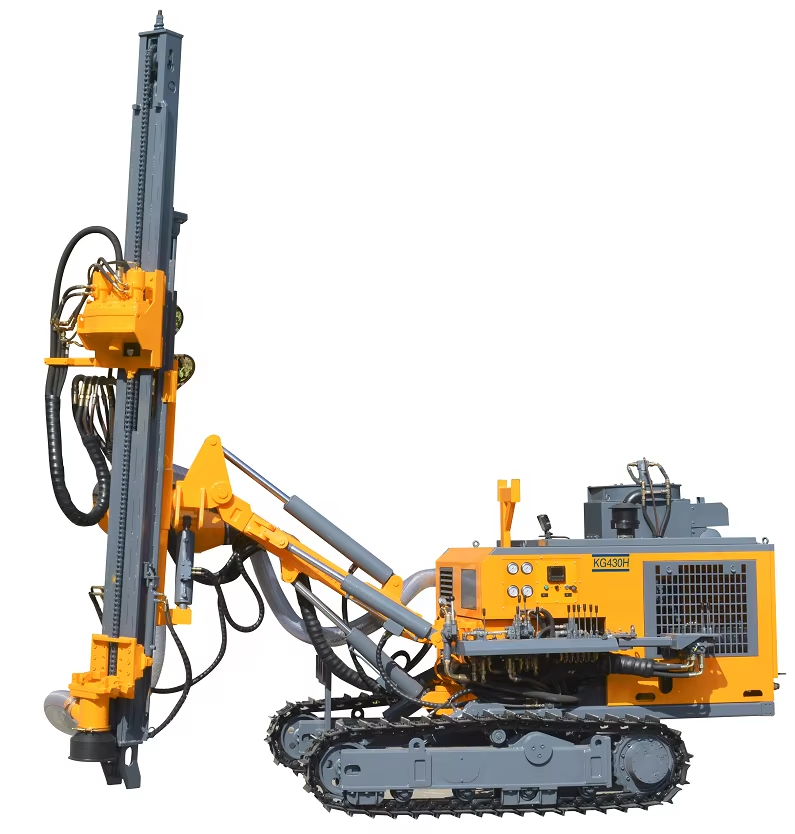
Selecting the Right Rock Drilling Tools for Formation Conditions
Rock hardness and abrasiveness as primary determinants of rock drilling tools selection
When it comes to picking the right rock drilling tools, there are really just two main things that matter: how hard the rock is (measured by something called Unconfined Compressive Strength or UCS) and how abrasive it gets on equipment. For those tough igneous rocks where UCS goes over 180 MPa, we need bits with tungsten carbide inserts because they stand up better to impacts. Sandstone that's super abrasive calls for PDC cutters made from polycrystalline diamond instead, since regular bits would wear out too fast. Get this wrong, especially when dealing with rocks high in silica content, and wear rates can jump as much as 40% faster based on what field crews actually see happening downhole. Most folks in the industry rely on standardized scratch tests to figure out abrasiveness levels, while keeping track of UCS classifications helps avoid situations where bits fail way before their time.
Case study: PDC arc 5-wing bit performance in medium-hard quartzite (UCS 120–180 MPa)
Testing showed that the new 5-wing PDC bit performed much better than regular models when working through quartzite rock with around 150 MPa UCS. The way the blades were shaped helped spread out the cutting force more evenly across the formation. This actually cut down on energy wasted from vibrations by about 18%. When drilling over 300 meters, we saw penetration rates go up by roughly 25% compared to what happens with standard 4-wing bits. Even though the quartzite had mineral content above 70 on the Mohs scale, which is pretty tough stuff, the cutters stayed intact throughout testing. Sensors placed down the hole indicated everything ran smoothly at 350 revolutions per minute with 12 kilonewtons of weight applied to the bit. These results suggest this design works well in medium hard formations where there's quite a bit of abrasion going on.
Optimizing Drilling Parameters to Maximize Rock Drilling Tools Performance
WOB–RPM Interdependence and Its Impact on Rock Breaking Efficiency
Weight on bit (WOB) and rotational speed (RPM) must be carefully balanced: excessive WOB at low RPM promotes bit balling in soft formations, while high RPM with insufficient WOB accelerates cutter wear in hard rock (UCS 150 MPa). Optimal pairings vary by formation:
- In granite (180–250 MPa UCS), 10–15 tons WOB at 60–80 RPM maximizes rate of penetration (ROP) while minimizing vibration
- For shale (<80 MPa UCS), 4–7 tons WOB at 100–120 RPM prevents floundering and maintains control
Field data confirms that mismatched parameters reduce drill bit lifespan by 40% and increase mechanical specific energy by 30%.
Data-Driven Parameter Calibration Using Down-the-Hole (DTH) Sensor Feedback Loops
Modern DTH sensors provide real-time torque, vibration, and temperature data—enabling closed-loop systems to dynamically adjust drilling parameters. These systems automatically:
£ Reduce WOB when axial vibration exceeds 6g
£ Lower RPM if bit temperature surpasses 300°C
£ Modulate fluid flow based on cuttings analysis
Such automation elevates ROP by 22% and cuts stuck pipe incidents by 65%, shifting maintenance from reactive to predictive—enhancing both safety and tool longevity.
Innovations in Rock Drilling Tools Design: Cutters, Materials, and Geometry
Cutting-edge designs leverage advances in geometry and materials science to improve wear resistance, penetration consistency, and service life—particularly in challenging formations.
Hyperbolic and AUOBHCS cutter geometries for enhanced cut depth control and wear resistance
The AUOBHCS cutter design, which features hyperbolic and asymmetric undulations with those special curved surfaces, works wonders at spreading out stress across the cutting edge. Field tests showed these cutters cut down on micro fractures in siliceous shale by around 27%. The unique curvature helps control how deep the tool goes into the rock, preventing those jarring impacts that can damage equipment while keeping things moving steadily forward. When it comes to granite drilling specifically, operators have found that AUOBHCS cutters last roughly 40% longer compared to standard flat profile tools. Another big plus is this self sharpening effect that keeps the rate of penetration stable even as wear sets in from all that abrasion. That kind of performance makes a real difference in extended reach and horizontal well operations where downtime costs money.
Nano-polycrystalline diamond (NPD) vs. conventional PDC in abrasive granite applications
When it comes to cutting through tough materials like high quartz granite with unconfined compressive strength over 200 MPa, nano-polycrystalline diamond (NPD) cutters really stand out compared to regular PDC tools. The reason? Their uniform nanocrystalline structure just holds up much better at the edges. Tests have shown these NPD cutters last about 2.3 times longer before showing signs of wear. Some field tests actually found that NPD can drill 35 percent more footage before needing replacement, plus they handle heat better when temperatures go past 300 degrees Celsius. Sure, the initial investment for NPD is steeper than standard PDC, but think about this: fewer replacements mean saving around $18 per meter drilled in those really abrasive conditions. That makes all the difference in geothermal drilling operations and deep mining projects where traditional PDC bits tend to fail way too soon under harsh conditions.
Ensuring System-Level Reliability of Rock Drilling Tools
Drill rod–bit interface harmonization for optimal energy transfer
Getting the drill rod and bit properly aligned makes all the difference when it comes to transferring kinetic energy efficiently. When things aren't lined up right, those annoying vibrations start happening which actually waste around 15 to maybe even 20 percent of the energy going into the system while also wearing down parts faster than they should. Mining companies have seen this happen time and again through their equipment analysis reports. Following industry standards like ISO 9001:2022 helps keep everything compatible because it sets clear expectations for how threads need to fit together and what size variations are acceptable. Real world testing has shown that when drill components work well together, operators see about a 12% boost in drilling performance and roughly 30% fewer instances where bits break before their expected lifespan. These improvements translate directly to cost savings and better productivity on site.
Proactive maintenance strategies to extend rock drilling tools service life
Reliable equipment performance in tough environments really depends on predictive diagnostics rather than sticking strictly to regular maintenance schedules. Most operators find it makes sense to check for tiny cracks using magnetic particle inspection once a week, while hardness tests on those tungsten carbide bits happen about every month. The sensors built into modern tools actually give real time info that lets technicians replace parts before they hit dangerous wear levels. Companies implementing these kinds of practices typically see around a third less money spent replacing drill bits and almost two thirds fewer unexpected shutdowns each year. And when working through hard rock like granite, adding lubricants designed for specific temperatures helps cut down on abrasive damage too.
FAQ
What are the primary factors in selecting rock drilling tools?
The primary factors in selecting rock drilling tools are rock hardness, measured by Unconfined Compressive Strength (UCS), and the abrasiveness of the rock, which affects equipment wear.
How do modern DTH sensors improve drilling efficiency?
Modern Down-the-Hole (DTH) sensors provide real-time data on torque, vibration, and temperature, enabling automated systems to dynamically adjust drilling parameters, enhancing efficiency and safety.
What's the advantage of Nano-polycrystalline diamond (NPD) cutters?
Nano-polycrystalline diamond (NPD) cutters offer longer lifespan and better edge durability compared to regular PDC tools, making them ideal for cutting through tough, abrasive materials like high quartz granite.