
 EN
EN
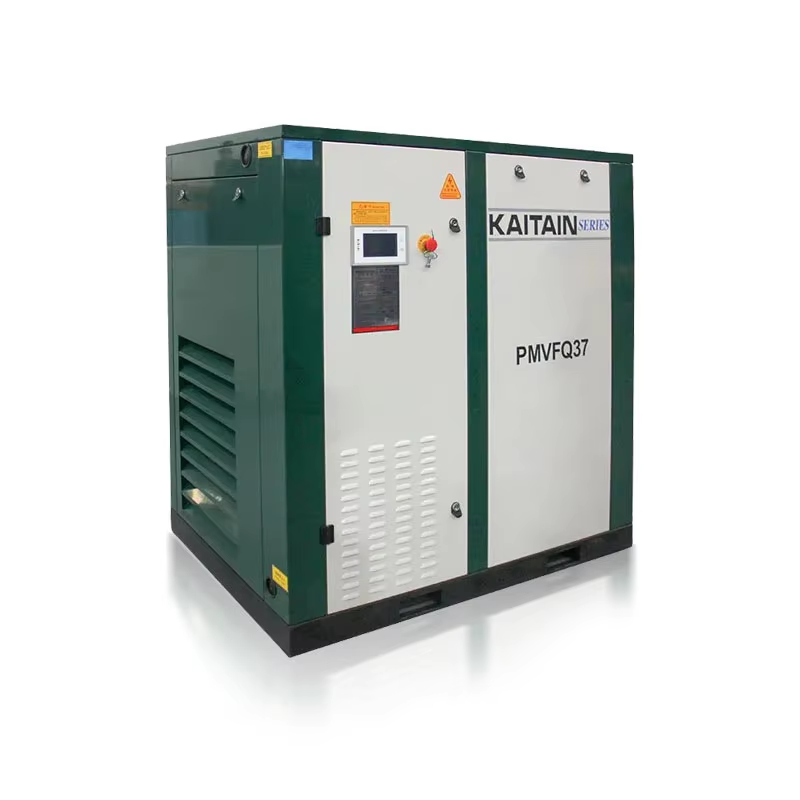
How the 75kW Screw Industrial Air Compressor Works and Why It Outperforms Alternatives
Working Principle of Screw-Type Industrial Air Compressors
Screw compressors work with two helical rotors that fit together inside a sealed housing to compress air continuously. When air comes into the intake, those spinning screws shrink the space where air gets trapped by about 85 to 90 percent, creating pressures as high as 14.5 bar or around 207 psi without any pulsing effect. What makes this setup different from piston models is that it doesn't have those annoying start and stop cycles we see in older systems. Instead, it delivers a constant stream of compressed air, which is exactly what manufacturing plants need when they can't afford interruptions in their air supply lines.
Role of the 75kW Motor in Delivering Consistent, High-Efficiency Output
This 75kW motor keeps delivering maximum torque even when running at less than full capacity, which helps maintain consistent airflow even when there are dips or spikes in voltage supply. Its impressive IE4 efficiency rating stands at 95.5%, meaning it uses around 23% less power compared to similar piston driven alternatives after running for about 8,000 hours each year. What really makes this motor stand out though are the built-in variable frequency drives (VFDs). These smart components constantly tweak the motor speed based on what's actually needed at any given moment, so we're not wasting energy on unnecessary output. It's these kinds of features that make modern electric motors so much better than their older counterparts for industrial applications.
Comparison with Piston and Centrifugal Compressor Technologies
| Feature | Screw Compressor (75kW) | Piston Compressor | Centrifugal Compressor |
|---|---|---|---|
| Efficiency at 70% load | 94% | 78% | 82% |
| Maintenance interval | 12,000 hours | 500 hours | 24,000 hours |
| Noise level (dBA) | 68→72 | 82→90 | 75→80 |
| Startup time | Instant | 30→60 seconds | 2→5 minutes |
Screw compressors ramp up 37% faster than centrifugal units and outperform piston models by 21% in energy efficiency under intermittent loads, according to FluidAire Dynamics.
Thermal Management and Energy Recovery Systems for Reduced Waste
Oil cooling systems that are advanced enough can maintain temps under around 95 degrees Celsius or so, which means the oil lasts roughly four times longer than it would otherwise. And here's another benefit nobody talks about much these days: almost all that wasted heat energy can actually be captured and put to good use. About 92 percent of it goes towards heating buildings or warming up process water before it even enters the system. For facilities located in places where winters get really cold, this kind of setup can cut down on boiler fuel expenses quite substantially. Some plants have reported saving nearly eighteen thousand dollars each year just from this one feature alone according to data published in last year's Industrial Thermal Systems Report.
Key Performance Benefits of a 75kW Industrial Air Compressor in High-Demand Environments
Superior Energy Efficiency Ratings and Lower Operational Costs
The newer 75kW screw compressors are way more efficient than old school piston models, saving businesses around 35 to 50 percent on energy costs. For facilities running nonstop, this can translate into over fifteen grand saved each year just on electricity bills. Most of these savings come from something called Variable Speed Drive tech. Basically, it adjusts how hard the motor works based on what the system actually needs at any given moment. According to research published last year by Fluid Air Dynamics, companies using VSD systems saw their energy usage drop between thirty and seventy percent when dealing with changing air demands throughout the day. Makes sense really since nobody wants to pay for power they aren't even using.
Reliable, Continuous Airflow Under Fluctuating Factory Loads
Unlike centrifugal compressors, which are sensitive to load variations, 75kW screw units maintain ±1% pressure stability even during rapid 80% load shifts. Dual-stage filtration and oil-cooled rotors ensure consistent performance in high-temperature or dusty conditions, supporting uninterrupted operation of pneumatic tools and automation systems.
Low Maintenance Needs Due to Advanced Rotor and Bearing Design
Asymmetric helical rotors and polyimide-coated bearings minimize metal-on-metal contact, reducing wear and extending service intervals to 8,000–10,000 hours—more than double the average for piston compressors. This advanced design lowers maintenance frequency by 40%, decreasing labor costs and downtime.
Integrated Noise Reduction for Safer, Quieter Industrial Operation
Engineered with labyrinthine air channels and vibration-dampening mounts, top-tier 75kW models operate at 68–72 dB, comparable to office HVAC systems. This noise level complies with OSHA hearing conservation guidelines and enhances workplace communication in busy production areas.
Critical Applications of the 75kW Industrial Air Compressor Across Manufacturing Sectors
Powering Pneumatic Tools and Robotics in Automotive Assembly Lines
The automotive manufacturing sector has seen significant changes in recent years, with many plants relying on 75kW screw compressors to deliver between 16 and 25 bar pressure across various operations. These machines power everything from pneumatic riveting tools to robotic welding arms and even paint spraying equipment throughout assembly lines. A look at industry data shows something interesting happening in Europe right now. The latest Automotive Manufacturing Report points out that around 87 percent of auto factories there have switched to screw type compressors as standard equipment. Why? Well, these compressors run much smoother than older piston models without all that annoying vibration. And this matters because it actually cuts down on positioning errors during automated processes by about a third when compared to traditional alternatives.
Precision Control in Food and Beverage Processing Systems
Food-grade rotary screw compressors deliver oil carryover levels below 0.01 ppm, meeting ISO 8573-1 Class 0 standards for clean air in bottling lines and CIP (Clean-in-Place) sanitation. The 2023 Food Processing Technology Study showed these units reduce energy waste by 19% in dairy operations compared to centrifugal alternatives, while ensuring product safety.
Supporting Textile Machinery and Chemical Plant Operations
Textile manufacturers rely on the 75kW model’s 85–100% duty cycle to power looms continuously, with corrosion-resistant variants handling exhaust temperatures up to 90°C in dyeing chambers. In chemical processing, a 2022 industry analysis across 14 Asian sites revealed 42% fewer unplanned shutdowns when using screw compressors versus reciprocating types.
Design Innovation and Long-Term Durability in Zhejiang Xinyu Machinery’s 75kW Models
Corrosion-Resistant Construction for Extended Service Life
The 75kW compressors made by Zhejiang Xinyu come equipped with special nickel chromium alloy coatings plus IP55 sealed housing that stands up well against both moisture and chemicals. For extra protection against rusting, they apply multiple layers of epoxy treatment on all important parts. This helps maintain their volumetric efficiency at over 95 percent even after running for around 10,000 hours straight. According to tests done by independent labs referenced in the CECOR Durability Report from 2023, these machines actually outlast regular galvanized ones by about three times when used near coastlines where salt air can be so damaging. That kind of longevity makes them particularly valuable for operations located in such harsh conditions.
Smart Monitoring and Remote Diagnostics for Predictive Maintenance
The IoT sensors built right into machinery keep track of things like bearing temps, oil thickness changes, and rotor position with around 2% measurement error. These readings go into smart systems that can spot problems coming down the road anywhere from 12 to 21 days ahead of time. According to recent industry data from last year's maintenance survey, this early warning system has slashed unexpected shutdowns by nearly 60% over traditional scheduled maintenance approaches. When something crosses safety limits, workers get automatic warnings through encrypted communication paths. This lets technicians address issues before they become major headaches during production runs.
Customizable Voltage, Pressure, and Control Options for Global Use
A modular platform supports configurations for 380V–480V electrical systems and discharge pressures from 7–15 bar. Digital regulators maintain setpoints within 0.2 bar despite load swings, while integrated phase converters allow reliable operation in regions with unstable grids. Since 2022, this adaptability has enabled deployment across 32 countries with diverse industrial standards.
Real-World Performance: 18-Month Case Study in a Metal Fabrication Facility
At a stamping facility located in Southeast Asia, the 75kW unit managed an impressive 98.4% uptime despite facing some pretty harsh conditions. We're talking about environments where humidity reaches 85% and temperatures climb to around 43 degrees Celsius. The energy recovery system did something remarkable too. It was able to capture approximately 2.3 megawatt hours of waste heat each month. To put that into perspective, this amount could actually run twelve CNC machines simultaneously. After clocking in over 12,000 operating hours, the rotor clearances stayed remarkably close to original factory specs, only deviating by 0.03 millimeters at most. This shows just how solid and reliable the mechanical components have remained throughout extended operation periods.
Sustainability, Cost Efficiency, and Market Trends Shaping the Future of Industrial Air Compressors
Rising Demand for ISO 50001-Compliant and Energy-Certified Compressors
The global industrial air compressor market is projected to grow at a 6.3% CAGR through 2031, driven by stricter sustainability mandates. Companies increasingly specify ISO 50001-certified systems, which demonstrate 12–18% better energy utilization in audits. Over 60% of new installations in 2024 include IoT-enabled monitoring to support circular economy initiatives.
Energy Savings Through Variable Speed Drive (VSD) Integration
VSD-equipped compressors reduce energy use by 35–50% compared to fixed-speed units, according to industry analysis. By matching motor RPM to airflow demand, VSDs eliminate idle running losses. Food processing facilities report average annual energy cost reductions of 28% after upgrading legacy systems to VSD models.
Lifecycle Cost Analysis: Balancing Upfront Investment With Long-Term ROI
High efficiency compressors do cost about 20 to 30 percent more upfront compared to standard models, but according to recent studies from 2024, businesses typically recoup their investment within just 18 to 24 months thanks mainly to significant energy savings and fewer breakdowns. Looking at the bigger picture over fifteen years, companies spend roughly forty percent less on running these advanced systems versus traditional piston compressors. And there's another benefit too many people overlook: governments across thirty eight different nations offer tax breaks covering between ten and twenty five percent of what it costs to upgrade to ENERGY STAR certified equipment. These financial incentives alone can make all the difference for small manufacturers trying to stay competitive while cutting expenses.
Market Challenge: Why High-Efficiency Models Still Face Adoption Barriers
Despite proven financial and environmental benefits, 42% of industrial facilities cite capital constraints as the main barrier to adopting advanced compressors. Misconceptions about complexity and inconsistent incentive programs also hinder adoption. Addressing these challenges requires standardized benchmarking tools and transparent ROI calculators tailored to specific industries.
FAQ
What is the primary advantage of a 75kW screw industrial air compressor?
The main benefit is its continuous stream of compressed air without pulsing, unlike piston models, which helps prevent interruptions in manufacturing processes.
How does the 75kW motor enhance energy efficiency?
The 75kW motor adjusts speed with variable frequency drives to meet real-time requirements, reducing energy waste.
What sectors benefit most from using screw compressors?
Automotive manufacturing, food and beverage processing, textile machinery, and chemical plants benefit significantly from screw compressors.
How do screw compressors contribute to sustainability?
They feature energy recovery systems that capture and utilize waste heat for heating purposes, reducing fuel costs.
What barriers does the market face in adopting high-efficiency compressors?
Capital constraints, complexity misconceptions, and inconsistent incentive programs are major challenges in adoption.
Table of Contents
- How the 75kW Screw Industrial Air Compressor Works and Why It Outperforms Alternatives
- Key Performance Benefits of a 75kW Industrial Air Compressor in High-Demand Environments
- Critical Applications of the 75kW Industrial Air Compressor Across Manufacturing Sectors
- Design Innovation and Long-Term Durability in Zhejiang Xinyu Machinery’s 75kW Models
- Sustainability, Cost Efficiency, and Market Trends Shaping the Future of Industrial Air Compressors