
 EN
EN
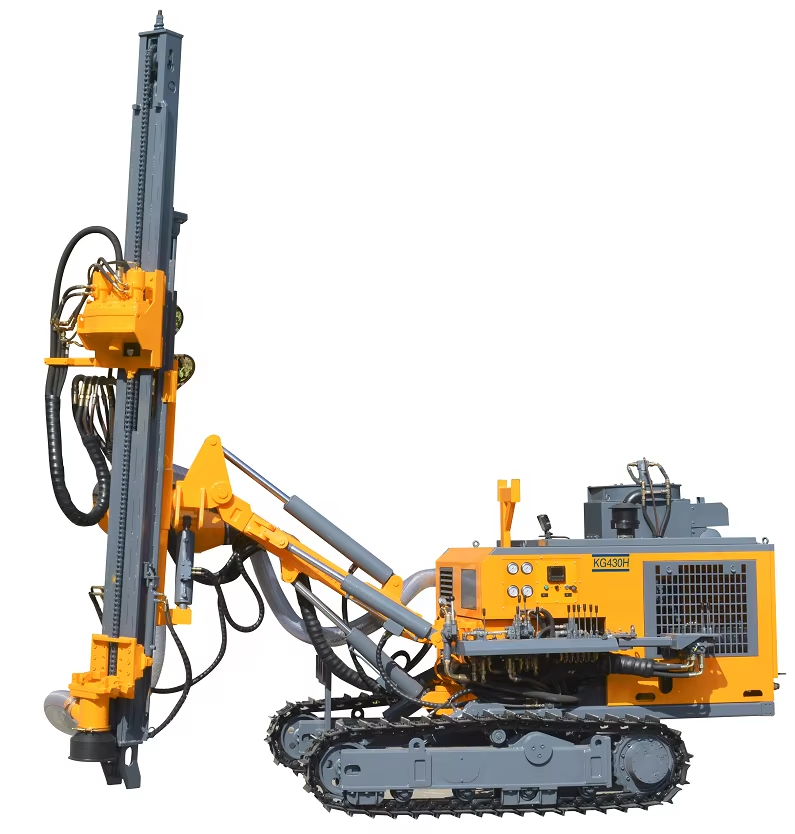
How DTH Drilling Works: The Percussive Energy Transfer Process
Pneumatic Down-the-Hole Hammer Mechanism and Bit Impact Dynamics
DTH drilling works by sending compressed air down the hole to create powerful impacts right against the rock face itself. This setup cuts down on wasted energy that would otherwise be lost traveling through long drill strings. Within the hammer mechanism, pressurized air pushes a piston up and down really fast around 25 to 50 times per second. When it hits the anvil attached directly to the drill bit, each strike packs quite a punch. We're talking about forces over 500 joules in some cases, enough to crack even tough rocks like granite and quartzite. The real advantage comes from delivering all that power exactly where it's needed at the bottom of the hole instead of relying on older methods like top hammers or rotary systems which lose efficiency along the way. Drill operators rely on special carbide button bits for these jobs. These bits have those tough tungsten carbide inserts built into them so they can handle the constant pounding without wearing out too quickly. Maintaining their sharp edges and overall strength makes all the difference when working through particularly hard formations.
Compressed Air’s Triple Role: Power Transmission, Cooling, and Cuttings Removal
Compressed air serves three integrated, non-redundant functions in DTH drilling:
- Power Transmission: It actuates the piston without mechanical linkages—enabling reliable, maintenance-light operation.
- Bit Cooling: Continuous airflow prevents thermal overload, preserving bit hardness and delaying carbide degradation during extended runs.
- Cuttings Evacuation: At velocities of 200–300 m/s, air lifts fragmented rock to the surface in real time, preventing regrinding, clogging, or borehole instability.
This synergy allows sustained penetration rates—e.g., 1–3 meters per minute in basalt using a 350 CFM compressor—without fluid circulation or manual cleaning. The result is faster, cleaner, and more predictable drilling in competent rock.
Why DTH Drilling Excels in Extremely Hard Rock Formations
Consistent Penetration Rate and Minimal Energy Loss with Depth
Depth independent energy delivery makes DTH drilling so effective in hard rock formations. Compare this to traditional top hammer systems where around 30% of the impact power gets lost every 100 meters due to rod vibrations. With DTH technology, the hammer sits right behind the drill bit itself. This setup keeps over 95% of the percussive force actually hitting the rock face. Field tests show consistent progress rates between 10 and 15 meters per hour when working through granite at depths exceeding 150 meters. Another advantage comes from the simultaneous cooling effect and removal of cuttings during operation. These processes work together to maintain performance levels despite potential issues like heat buildup or clogging from rock debris accumulating around the bit.
Enhanced Hole Straightness and Extended Bit Life in Granite, Basalt, and Gneiss
When the hammer moves along the borehole in a controlled way, it helps maintain straight alignment which cuts down on directional drift by about half when compared to traditional rotary techniques. This matters a lot for getting accurate blast holes and keeping geothermal wellbores intact. The situation changes quite a bit in those tough crystalline rock formations where standard bits wear out fast. Tungsten carbide button bits hold up much better though. Their special design spreads out the shock from impacts across the surface instead of concentrating it in one spot, so they don't chip away as easily. We've seen these bits last over 1,200 meters of drilling before needing replacement. Another big plus is how little vibration there is during operation. This gentle approach prevents unnecessary damage to the walls of the hole and stops unwanted fractures from forming in brittle gneiss layers that can complicate future operations.
Top Hard-Rock Applications for DTH Drilling
DTH drilling is the benchmark method for penetrating dense, low-permeability crystalline formations—-including granite, basalt, gneiss, and quartzite—-where precision, speed, and reliability are non-negotiable.
Blast Hole Drilling in Mining and Quarrying Operations
When it comes to open pit mining and quarries, DTH rigs really shine because they keep those holes straight, maintain good depth control, and penetrate rock much faster than needed for proper blasting operations. Field tests show operators can drill blast holes between 6 to 12 inches in diameter about 30 to 50 percent quicker compared to traditional rotary systems. This speed difference becomes especially important once we're talking about depths over 50 meters deep, where the downhole hammer action actually helps prevent the drill from wandering off course. Another big plus is that these rigs create less vibration overall, which means the drill pipes last longer before needing replacement. For companies running frequent blasting cycles, this translates into real savings on maintenance and parts over time, making DTH technology worth considering despite the initial investment cost.
Water Well and Geothermal Drilling in Low-Permeability Hard Aquifers
DTH drilling works really well when dealing with fractured bedrock aquifers where traditional techniques just stop working. The way it works is pretty straightforward actually the hammering action breaks down those tough metamorphic and igneous rocks like gneiss and quartzite that normally block water flow. This makes building reliable water wells possible even in these challenging conditions. When looking at geothermal projects, DTH can keep going through solid rock below 300 meters depth without slowing down much. What sets it apart from other methods is that it doesn't need all those drilling fluids and chemicals that might harm delicate underground formations. Instead, it uses compressed air which keeps things cleaner and creates stable holes that fit standard casings properly. Most drillers find this approach much better for maintaining formation integrity while getting the job done.
DTH Drilling vs. Alternative Methods: When to Choose DTH Over Rotary or Top-Hammer
Choosing the best drilling technique really depends on three main factors: how hard the rock formation is, how deep we need to go, and what level of accuracy matters for the job. Down-the-hole (DTH) drilling works much better than top-hammer systems when dealing with tough rocks beneath about 10 meters underground. The problem with top-hammers gets worse as they go deeper because their efficiency actually declines by around 15 to 20 percent every extra 10 meters down. This happens mainly because those shockwaves just don't travel well through all those metal rods. On the flip side, DTH technology sends more than 95% of that powerful impact straight to the drill bit itself. What does this mean practically? For granite or basalt formations, DTH maintains steady progress even at significant depths where other methods would struggle badly.
When it comes to drilling through soft ground and big diameter holes, rotary drilling works pretty well. But when faced with tough crystalline rock? Not so much unless we shell out for those pricey diamond bits. And let's not forget about the deviation issue either – rotary tends to drift around ±2 degrees while DTH stays much straighter at just ±0.5 degrees. Speaking of efficiency, DTH really shines here too. It clears out those pesky cuttings better than both rotary and top hammer methods, which means less time spent re-drilling and slower bit wear overall. Anyone working on deep geothermal installations, mining operations needing blast holes, or trying to tap into water sources within hard aquifers should seriously consider DTH technology. Especially important when dealing with anything over 150 mm in diameter, where DTH delivers something special: incredible depth potential combined with cost savings and consistently good hole quality that just can't be matched by other techniques.
FAQ
What is DTH drilling?
DTH drilling, or down-the-hole drilling, is a method that uses compressed air to drive a pneumatic hammer located directly behind the drill bit, enabling efficient rock penetration and high-impact force delivery to the bit itself.
How does DTH drilling work in hard rock formations?
In hard rock formations, DTH drilling excels due to its consistent penetration rate and minimal energy loss at depth. The hammer's proximity to the bit ensures most of the energy is used efficiently, thereby increasing drilling speed and precision.
What are the main applications of DTH drilling?
DTH drilling is widely used in mining and quarrying operations for blast hole drilling, as well as in water well and geothermal drilling in hard, low-permeability formations.
What are the advantages of using DTH drilling over traditional methods?
DTH drilling provides better energy transfer efficiency, precise hole straightness, extended bit life, and reduced deviation compared to top-hammer and rotary methods, especially in hard, deep rock formations.