
 EN
EN
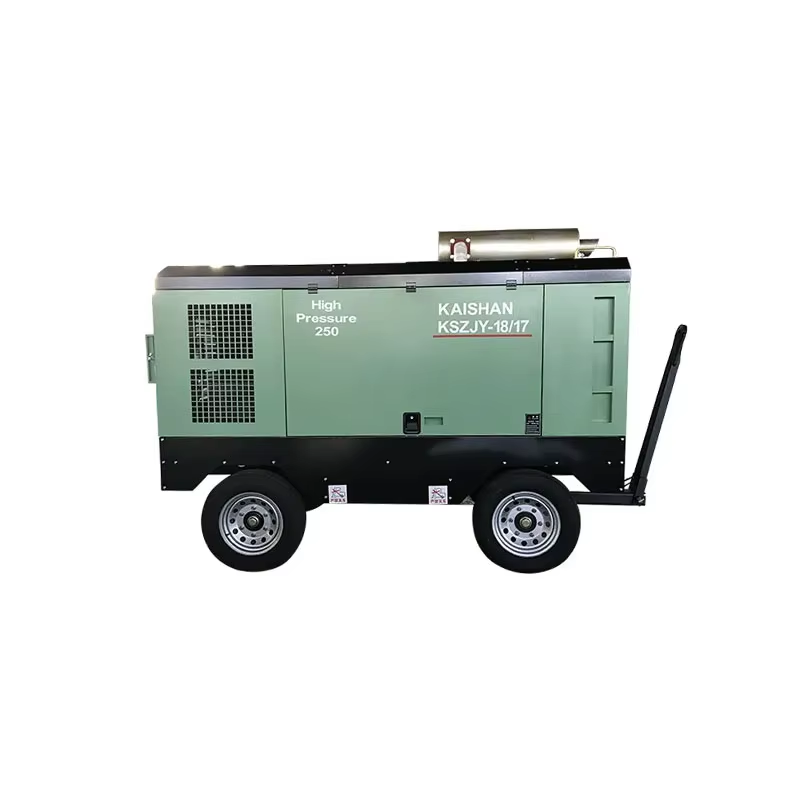
Sizing the Air Compressor for Continuous Quarry Demand
Calculating Total CFM and PSI Requirements Across Core Processes: Blasthole Drilling, Conveyor Pneumatics, and Dust Suppression
Accurate air compressor sizing begins with calculating total cubic feet per minute (CFM) and pounds per square inch (PSI) requirements across three critical quarry operations:
- Blasthole drilling consumes 300–600 CFM at 90–100 PSI per drill rig
- Conveyor pneumatics require 50–150 CFM at 60–80 PSI for material handling
- Dust suppression demands 100–400 CFM per nozzle at 20–50 PSI
Sum peak CFM values for concurrently operating equipment, then add a 25–30% buffer for leaks and future expansion. Ensure system PSI exceeds the highest individual tool requirement by 15–20%—this prevents pressure drops during simultaneous operations, a leading cause of failure in undersized systems.
Managing Load Variability and Peak Demand in Multi-Shift Operations Without Oversizing
Quarries experience 40–60% demand fluctuations between shifts, making static sizing ineffective. Oversizing wastes energy; undersizing risks production halts. The most effective response combines three interdependent strategies:
- Deploy variable speed drive (VSD) compressors that modulate output to real-time demand, cutting energy use by up to 35% during low-load periods
- Use modular configurations—base-load fixed-speed units paired with smaller VSD compressors dedicated to peak handling
- Size air receivers to provide 7–10 gallons per total installed CFM, absorbing startup surges and smoothing transient demand
Together, these measures maintain pressure variance under 2% while avoiding the 22% energy penalty associated with oversized fixed-speed systems in continuous operation.
Ensuring Air Compressor Reliability in Harsh Quarry Environments
Mitigating Dust, Heat, and Humidity: Filtration, Derating, and Corrosion-Resistant Design
Quarry environments present extreme challenges: airborne particulates often exceed 50 mg/m³, ambient humidity can surpass 90%, and temperatures routinely climb above 40°C. Standard industrial compressors fail rapidly under these conditions without purpose-built mitigation.
Getting rid of contaminants starts with multi stage filtration systems. First comes those centrifugal pre separators, then coalescing filters follow up behind them. Together they catch about 99.97 percent of particles smaller than 0.3 microns, which really helps prevent that annoying abrasive wear on valves, cylinders, and control systems over time. When working in hot environments, we cant ignore what happens when temperatures rise. The rule of thumb? Cut down on capacity by around 3% for each 5 degrees Celsius above what the unit was designed for. This simple adjustment keeps things running smoothly instead of facing unexpected thermal shutdowns or dealing with early bearing failures. Fighting corrosion goes way beyond just applying surface coatings. Real protection means building it into the system from day one. Look at components like zinc nickel coated receivers, vapor chamber cooled aftercoolers, and stainless steel pipes inside. These elements actually work together pretty well to stop moisture related pitting issues. Industry data shows these setups can last roughly 40% longer compared to regular configurations, making them worth considering for anyone looking at long term maintenance savings.
Achieving 98.5% Uptime: Redundancy, Predictive Maintenance, and Critical Spares Strategy
Keeping systems running nonstop depends on building reliability at multiple levels, not just relying on good hardware alone. Most facilities implement N+1 redundancy as standard these days. When a main compressor fails, backups kick in automatically within about 45 seconds, so production doesn't actually stop mid-process. For predictive maintenance, we're seeing companies use IoT vibration sensors that watch for belt tension imbalances over 5 mm/sec RMS, plus inline spectrometers that detect oil degradation early. These tools can spot potential problems 2 to 3 weeks before they become actual failures, cutting unexpected downtime by around three quarters according to Reliability Solutions Inc. from last year's report. Having spare parts readily available onsite makes all the difference too. Valve assemblies, coalescing filters, and those tricky PLC modules mean technicians can fix issues within hours instead of waiting days for shipments. Across continuous operation quarries, this comprehensive strategy typically results in better than 98.5% compressed air system availability throughout the year.
Optimizing Compressed Air Distribution for Large-Scale Quarry Layouts
Efficient air distribution is foundational—not ancillary—to sustaining continuous quarry operations. Poorly designed networks compound pressure losses, inflate energy costs, and undermine even the best-compressed air generation system.
Strategic Air Receiver Sizing to Stabilize Pressure and Absorb Load Fluctuations
Air receivers aren't just sitting there doing nothing like regular storage tanks. They actually act as pressure stabilizers in compressed air systems. When equipment like blasthole drills or conveyor actuators create sudden demand spikes, properly sized receivers soak up these fluctuations before they can cause big pressure drops throughout the system. Back in the day, people thought 1 to 2 gallons per CFM was enough for most setups. But today's quarries with their high cycle pneumatic tools running through multiple shifts need much more space. Industry standards now recommend around 7 to 10 gallons per CFM according to both ASME PCC-2 guidelines and what experts at the Compressed Air Challenge have observed. Going too big on receiver size brings problems too, like extra condensation forming inside and oil getting carried over into the system. On the flip side, if receivers are too small, pressure can swing more than plus or minus 10 psi, which triggers automatic safety shutdowns and causes drill rigs to stall right when workers are changing shifts. For large operations covering hundreds of feet, loop systems with central receivers keep pressure variations below 3% even over distances as long as 1,500 feet. This means all the tools perform consistently no matter where they're located on site.
Low-Pressure-Drop Piping: Material Selection, Sizing, and Layout Best Practices
What materials get chosen makes a huge difference in how well things run and how often maintenance becomes necessary in those tough quarry environments where everything gets worn down by abrasion and humidity. Aluminum pipes have become pretty much the go to choice these days because they don't react with anything, resist corrosion really well, and keep their smooth inside surfaces for years even after sitting through all that dusty, moist air day after day. Stainless steel still works great in areas where there's a lot of impact happening like around the crushers or at loading docks. The downside? It costs about 15 to maybe 20 percent more to install initially. But if there's serious wear and tear going on in specific spots, paying extra upfront can save money later on when replacement isn't needed so frequently.
| Factor | Aluminum | Stainless Steel |
|---|---|---|
| Corrosion Resistance | Excellent (non-reactive) | Superior (extreme conditions) |
| Pressure Drop | 0.3 psi/100 ft | 0.5 psi/100 ft |
| Installation Cost | $40/ft | $55/ft |
Beyond material, layout discipline is critical: use angled junctions −45° to cut turbulence-induced pressure loss by 30% versus 90° elbows; slope pipes downward 1–2% toward automated drain points to prevent moisture accumulation and abrasive slurry formation; and implement loop configurations with sectional isolation valves—enabling targeted maintenance without full-system shutdowns.
FAQ
What is the importance of CFM and PSI in air compressor sizing?
CFM (Cubic Feet per Minute) and PSI (Pounds per Square Inch) are crucial for determining the capacity and pressure requirements of air compressors in quarry operations. Accurate calculation ensures that the system can support simultaneous operations without failure.
Why do quarries experience demand fluctuations between shifts?
Demand fluctuations are common due to varying activities and machinery usage during different shifts. These shifts impact the overall load and demand on the air compressor systems.
How can redundancy help in achieving high uptime?
Redundancy ensures that backup systems take over immediately in case of primary system failure, minimizing downtime and maintaining continuous operations.
What are the benefits of using aluminum pipes in quarry environments?
Aluminum pipes offer excellent corrosion resistance, lower pressure drops, and durability against the abrasive and humid conditions common in quarry environments.