
 EN
EN
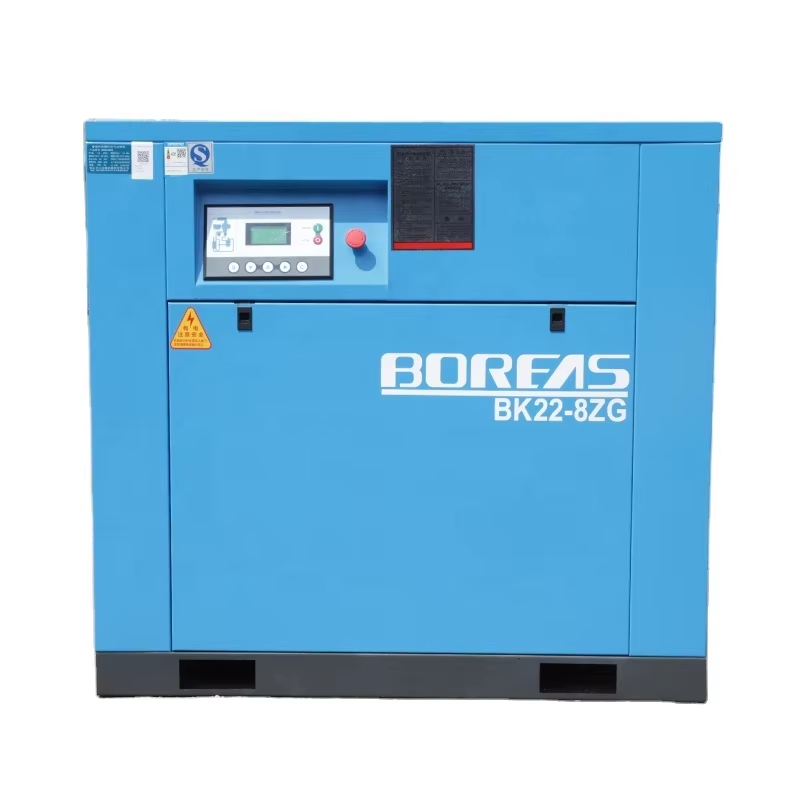
Energy Efficiency of Kaishan Air Compressors in Industrial Applications
How Screw Air Compressor Design Enables Superior Thermal and Mechanical Efficiency
The two stage screw compressors from Kaishan produce about 15 to 20 percent more airflow compared to their single stage counterparts because they split the compression process into two distinct stages. What this means in practice is significantly reduced heat buildup and less strain on mechanical components, so these machines can run reliably at full capacity for extended periods without breaking down. With rotors that are precisely machined and chambers designed with optimal geometry, internal leakage gets kept to a minimum. The result? An impressive 97% isothermal efficiency rating, which puts them roughly 9 percentage points ahead of what most manufacturers achieve with their reciprocating compressor designs.
Role of Variable Speed Drive (VSD) Technology in Reducing Energy Consumption
Variable Speed Drive (VSD) systems work by adjusting motor speeds according to actual air needs at any given moment, which means they don't waste power when there's not much load on them. According to some market research from 2025 called something like the Global Industrial Compressor Market Report, Kaishan compressors fitted with these VSDs actually cut down on energy usage between 30 to 40 percent compared to older fixed speed models. Another benefit worth mentioning is how these drives slash starting currents by around half. That makes a big difference for electrical systems since it puts less stress on everything connected and tends to make parts last longer too.
Performance Data: Kaishan vs. Industry Average in Specific Power Consumption (kW/m³/min)
Independent testing shows Kaishan compressors operate at 0.16 kW/m³/min under full load—23% below the industry average of 0.21 kW/m³/min. At partial loads, Kaishan maintains 0.12 kW/m³/min versus an industry-wide 0.18, highlighting superior efficiency across operating ranges. Over 10,000 annual operating hours, this translates to 560 MWh saved per unit.
Consistent and Reliable Airflow for Demanding Industrial Processes
Modern manufacturing demands precise, uninterrupted airflow to ensure process stability and product quality. Kaishan compressors meet these requirements through engineered solutions that maintain performance despite fluctuating operational loads.
Engineering Precision Behind Stable Airflow Under Variable Operational Loads
Three integrated systems ensure consistent output:
- Dynamic flow control adjusts air delivery within ±0.5% of setpoints
- Precision pressure regulators sustain line pressure during sudden tool activation
- Advanced surge prevention eliminates flow interruptions during load transitions
These features support continuous multi-shift operations, such as automotive painting systems requiring a steady 7 bar supply (2023 Industrial Pneumatics Report).
Case Study: Uninterrupted Operation in Automotive Manufacturing
A Tier 1 automotive supplier replaced legacy equipment with six Kaishan screw compressors in a 24/7 production facility:
| Metric | Pre-Installation | Post-Installation (18 Months) |
|---|---|---|
| Air-related downtime | 14 hours/month | 0.7 hours/month |
| Energy variance | ±15% | ±3.8% |
| Maintenance costs | $9,200/month | $3,100/month |
The system maintained 98.6% airflow stability while powering 87 robotic welders and 14 assembly lines simultaneously. Plant managers reported complete elimination of airflow-related defects in critical suspension component production.
Durability of the Kaishan Screw Air End: Built to Last Beyond 100,000 Hours
Core working principle of screw compressors and its impact on airend longevity
The helical screw design uses meshing rotors with minimal metal-on-metal contact, significantly reducing friction and wear. Unlike reciprocating piston compressors that endure cyclical stress, rotary screw mechanisms distribute forces evenly across rotating components, preserving efficiency and structural integrity over time.
High-quality rotor coatings and advanced bearing systems for extended service life
Rotors feature anti-corrosion coatings resistant to abrasive particulates, while hydrodynamic bearings ensure uniform load distribution. These innovations maintain performance under extreme temperatures (-20°C to 120°C). Third-party testing confirms coated rotors exhibit less than 0.5% dimensional change after 80,000 hours—half the wear rate of standard industrial compressors.
Proven reliability in harsh environments: MTBF exceeding 100,000 hours
In cement production facilities, Kaishan compressors achieved a mean time between failures (MTBF) exceeding 110,000 hours—22% above typical rotary screw benchmarks (Fluid Handling Quarterly 2023). They perform reliably in conditions featuring:
- Particulate levels above 15 mg/m³
- Humidity exceeding 85%
- Sustained vibration up to 7.5 G-force
This durability extends service life by over 25,000 hours before major overhaul compared to industry-standard units.
Minimal Downtime Through Smart Design and Predictive Maintenance
Integrated Control Systems for Real-Time Monitoring and Fault Prevention
The Kaishan compressors come equipped with special control systems that keep track of over 28 different operating factors. Things like discharge pressure levels, oil temps, and machine vibrations are all monitored closely. What makes these systems stand out is how they automatically adjust workload distribution while catching problems with bearings or seals long before they become serious issues. The smart software actually looks at patterns over time and can send warning signals as much as 200 hours ahead of when something might break down. This gives technicians plenty of time to fix things during regular maintenance periods instead of dealing with unexpected breakdowns.
Predictive Maintenance Features Reducing Unplanned Outages and Service Costs
Looking at data from around 2500 installations across different industries, it becomes clear that Kaishan's predictive maintenance strategy cuts down on unexpected downtime somewhere between 35 to 42 percent when compared with traditional calendar based maintenance approaches. Facilities are able to spot signs of wear early thanks to techniques like vibration analysis and thermal imaging scans, which helps them save money on repairs since they replace parts before failures happen rather than scrambling during emergencies. The service life of important components such as air oil separators and rotor assemblies gets extended by about 40 percent too. All these improvements translate into roughly 15 to 20 percent savings on yearly maintenance expenses for most companies implementing this system.
Long-Term Cost Savings and Return on Investment with Kaishan Compressors
Total Cost of Ownership (TCO) Analysis Over 10 Years vs. Traditional Piston Compressors
The Kaishan screw compressors actually end up costing about 22 to 35 percent less overall compared to those old piston models when looking at a ten year period. What really stands out is how their robust airend design cuts out those expensive overhaul costs that piston units typically need every five to seven years, which can run anywhere from eighteen thousand to forty grand according to Fluid Power Journal back in 2023. And it gets better too because these machines dissipate heat around 38% quicker than standard options. That translates into real money saved on electricity bills, somewhere in the neighborhood of nine thousand to fifteen thousand dollars each year just for a single 100 horsepower unit.
| Cost Factor | Screw Compressors | Piston Compressors |
|---|---|---|
| Initial Purchase | $65k | $42k |
| 10-Year Energy Use | $280k | $410k |
| Maintenance/Repairs | $32k | $105k |
| Total 10-Year TCO | $377k | $557k |
Energy Savings Driving ROI Within 3–5 Years in Medium-Scale Industrial Settings
When it comes to power efficiency, two stage compressors typically offer around 19 to 23 percent improvement in specific power consumption compared to single stage models. For businesses running medium sized systems between 200 and 500 horsepower, this translates into annual savings somewhere between $28,000 and $37,000. Looking at actual installations across various industries, many operators find they can recoup their initial investment just from reduced energy costs alone in about 42 months. That's actually quite impressive when considering standard payback periods for similar equipment usually take about 17 months longer according to the latest Compressed Air Best Practices report from 2023.
FAQ
What makes Kaishan screw air compressors more energy efficient than other compressors?
The two stage screw compressors from Kaishan split the compression process into two distinct stages which results in significantly reduced heat buildup. Combined with Variable Speed Drive (VSD) technology, these compressors cut down on energy usage by up to 40%.
How do Variable Speed Drives contribute to energy savings?
Variable Speed Drives adjust motor speeds according to actual air needs at any given moment, reducing unnecessary power consumption and cutting starting currents by half.
What is the average energy consumption of a Kaishan compressor compared to the industry average?
Kaishan compressors operate at 0.16 kW/m³/min under full load, 23% below the industry average of 0.21 kW/m³/min.
How long can Kaishan screw air ends function effectively?
Kaishan screw air ends are built to last beyond 100,000 hours due to minimal metal-on-metal contact and high-quality rotor coatings.
How does predictive maintenance benefit users of Kaishan compressors?
Predictive maintenance reduces unexpected downtime by 35 to 42%, allowing facilities to spot wear early and save on repairs.
Table of Contents
- Energy Efficiency of Kaishan Air Compressors in Industrial Applications
- Consistent and Reliable Airflow for Demanding Industrial Processes
- Durability of the Kaishan Screw Air End: Built to Last Beyond 100,000 Hours
- Minimal Downtime Through Smart Design and Predictive Maintenance
- Long-Term Cost Savings and Return on Investment with Kaishan Compressors
-
FAQ
- What makes Kaishan screw air compressors more energy efficient than other compressors?
- How do Variable Speed Drives contribute to energy savings?
- What is the average energy consumption of a Kaishan compressor compared to the industry average?
- How long can Kaishan screw air ends function effectively?
- How does predictive maintenance benefit users of Kaishan compressors?